Sunday, March 31, 2019

"This American Life"

Reflection

"This American Life"

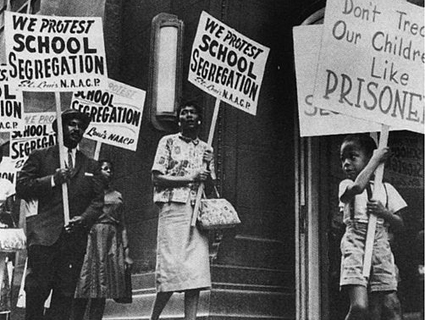
This was an interesting podcast explaining the integration process and trials of the Normandy school district. The podcast mainly followed the story of Nedra Martin and her daughter Mah'Ria Pruitt-Martin's story and how they experienced the trials and errors of the integration process in the Normandy district and surrounding districts. The school Mah'Ria was in was in bad condition. The school was on probation. The school was not just on a week long probation. Not a month long probation. The school was on a 15 year long probation. It was not counted as a qualified school for 15 years. After these long 15 years, the district then lost its accreditation from the state entirely. The district let the students transfer to whatever neighboring school they wanted and over 1000 students took this offer. Many of these transfer students excelled in their schools and held honor positions. However, before the students could even enter these schools, they were met with great trials from the parents of the current students at the school. Many parents thought that the new students would drop the rating of the school. They also thought that they would make the school a much more dangerous place. They felt that in order to have these new students, they would need to install metal detectors or hire drug sniffing dogs or other things that would prevent students from bringing bad things into the schools. They said that this was the only way they would let their children continue attending the school. Let me tell you, as a students from a mainly white school district that had a pretty good ranking, there were still a great amount of drugs and dangerous items that entered the school, even without students from lower level schools entering into my district. Honestly, I don't think that any extra students would have made the district any worse than it already was. In the podcast they mentioned that the government then took over and changed the Normandy district all together and made it into an non-accredited district so that they could get away with keeping children in this awful district. Those that stayed in this district did not get the chance they deserved and fell behind, all because the government didn't want to spend a little bit more money on the education budget.

Sunday, March 24, 2019

"In the Service of What?"

 Reflection

 "In the Service of What?"

https://drive.google.com/file/d/0B-JcBFAuLc-0Uk96Z2g3NDI2bkU/view 

Joseph Kahne and Joel Westheimer

 In this article I am getting that many political leaders are trying to change schools into teaching the kids how to better the country in the future without teaching them about the issues in the world outside of school. Many in society feel that the schools should open the classrooms to only specific issues that the world is facing. Many believe that the children are too young or innocent to be exposed to specific issues and not others even though the children are already being exposed to these issues. They feel that the children will nit understand these issues or they don't want the children to understand. In reality, many children are already being exposed to these issues and will continue being exposed to them due to where the live or due to their families. Many political leaders don't understand that these children are already living in and are experiencing these issues that they are hiding them from. I feel that these children should be exposed to these issues reasonably. We should not just dump these issues onto them and bombard them or just completely avoid the issues in total. We should expose everyone to these issues in a way where they feel comfortable and where their opinions are being understood and listened to. So many children are being exposed to different issues at an early time in their lives and they don't have a safe and comfortable space to express their feelings about what they are going through, but they don't. The school system is pushing the children away from these issues.

Wednesday, March 20, 2019

"Safe Spaces"

 Reflection

"Safe Spaces"

Gerri August


"Safe Spaces" is an article written by Gerri August about LGBTQ+ problem regarding safe spaces in schools. This is something that effects myself and also many of my friends because I am a part of the community and so is many of my friends. I have seen many people who I am close to that are struggling with both being home at being at school. It is a struggle for them to be accepted by their family and even some of their friends. One of my close friends has made strides in their female to male transition and are becoming greatly open with who they truly are. I'll call them C. I couldn't be more proud of C, but I see the struggle that he is going through. He is one of three children, the others of which are both female. I am close with his family and I see the truth behind the happy family. His mother is having a bit of trouble changing the pronouns and getting used to having a son but she is really trying to make him feel as comfortable as possible. His father and older sister are other issues. His father uses religion as a backing mechanism to defend his disapproval of C's choices. He believes that however you are at birth is how you should remain. C's older sister just completely disapproves. She calls C by the wrong pronouns and ridicules him. I happened to play a sport with his sister and I would often hear her talking about him in a way that made me very angry. I would try to talk to her about it but she would either not listen or just walk away. At school, C has many friends that are comfortable with his transition but there are random people in the school that do not understand what he is going through, but many just go with the flow of what C wants to be known as but there will always be a few people we encounter around the school that really don't understand and don't want to understand how he is feeling and why he has transitioned.  Many from older generations make jokes about safe spaces because they don't understand why they are so important. I believe that safe spaces in schools are really important for those who don't have other spaces in their lives. These safe spaces, including the simple ones like a supportive teachers classroom, can save lives. Theses spaces give anyone who needs it a place to be themselves and to give them support and give them the home and family that they may be lacking. Safe spaces save lives.
Monday, March 4, 2019

Snow Day-March 4, 2019

Snow Day Class

"Unlearning the Myths that Bind Us"

Linda Christensen

 Popeye


  1. The moral of the story is that the man will always save the woman and save the day and also that vegetables will give him the strength to do so.
  2. The main protagonist is Popeye and he is a white American man.
  3. One of the servants was Olive Oil after she was captured. She is a white American woman. When they were being served their food the servant was a man who was a person of color. When Popeye defeated the bad guy, he made them act as servants and they were all men of color.
  4. The buffoon was the white American man that was accompanying them on the trip.
  5. This does not pass the Bechdel test.
  6.  This conveys that women need a man to save them from every situation, similar to other Popeye episodes.
  7. The message of race and ethnicity that was conveyed was that only if you were a fit, white, American man, could you save the day.

Sunday, March 3, 2019

"Unlearning Myths that Bind Us"

Reflection

Unlearning the Myths that Bind Us

Linda Christensen

https://drive.google.com/file/d/0B-JcBFAuLc-0NEFOT1BJZXVnZnM/view

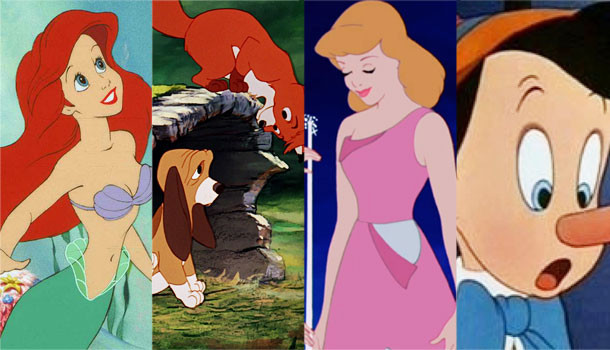
Fairy tails are a topic that I've debated my entire life. I was always told by movies and T.V. and by many around me that life was supposed to be like a movie. This article includes some of the ways that cartoons and fairy tales have molded the ideals for today's society. I feel that this is all too true. As a child, I looked to the Disney princesses as my main role models. I saw these beautiful women being saved by their Prince Charming and living happily ever after. I thought that women had to be skinny and beautiful and a damsel in distress or else they were not good enough to be a princess. I grew up with the impression that if I didn't have an hourglass figure and long legs a flowing hair that I was not good enough. I also felt that if I couldn't find a man to save me, I couldn't have a happily ever after. This was especially hard for me because I was also told I had to be strong and independent. The two were just so contradictory that I grew to be confused. I was told to be like a princess but then I was also being told to be myself and never be like anyone else. These cartoons were controlling who I was and who  was to become and it was the same for many all over the world. Cartoons have come a long way but they continue to lack the diversity and representation children desire.